Is access enough? Auth patterns for Claude Managed Agents
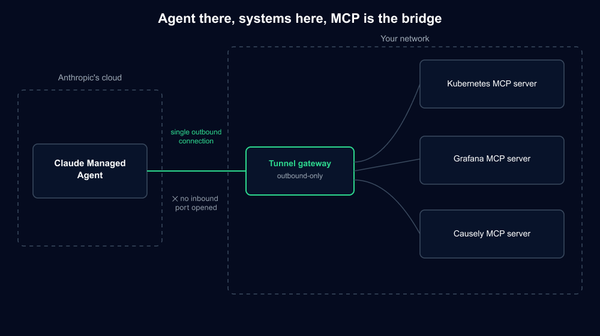
MCP tunnels let Claude Managed Agents reach and authenticate to real infrastructure, but access alone doesn't make an agent one you'd trust to run on-call.
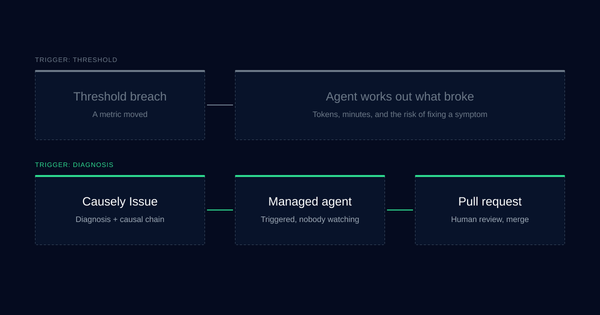
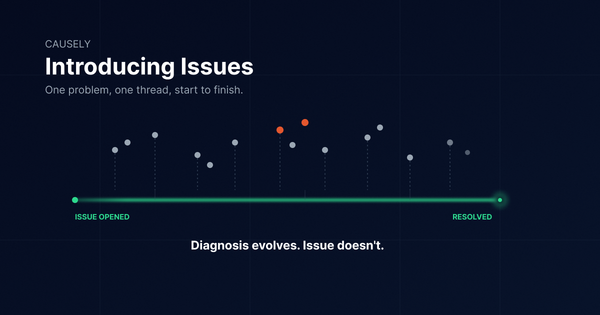
On-call means re-triaging the same problem as diagnoses shift underneath you. Causely's new Issues give people and agents one stable thread instead.
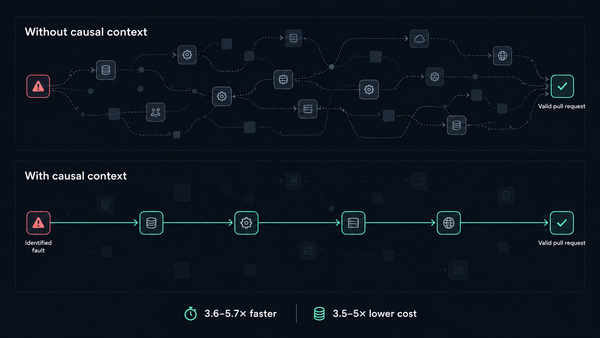
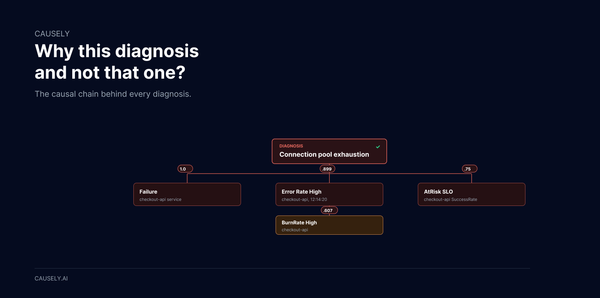
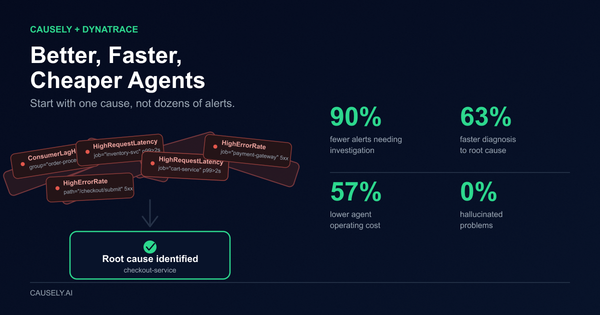
Causely turns Dynatrace entities, topology, and alerts into a causal model that names the root cause, making on-call agents better, faster, and cheaper.
Most frontier LLMs degrade badly by ~1,000 tokens of input, not the millions in their spec sheets. For on-call agents, that means accuracy drops exactly as an incident gets complex. The fix isn't a bigger model. It's not handing the LLM the raw data at all.
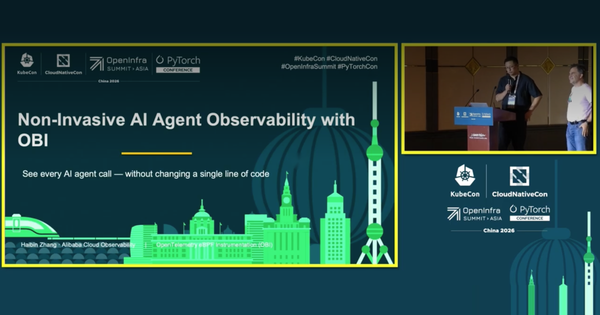
Getting OpenTelemetry into Java enterprise applications without touching the JVM has been a persistent gap. OBI changes that, and for Causely customers, it unlocks the topology data needed to pinpoint root causes across complex Java microservice architectures.
Causely MCP Skills are live. One master router + six specialist workflows: alert triage, change impact, K8s investigation, postmortems & more. Describe your situation, Skills pick the right tools. No prompt engineering. No orchestration.
Observability semantics fall into six layers, from entity inventory to constraints. Most tooling reaches layer two. This post defines all six precisely.
Standard observability tools were built for deterministic systems. GenAI applications break that contract — token counts shift, tool call patterns change, completion rates drop — and none of it fires an alert. Here is what OTel GenAI instrumentation gives you today, and where the gaps remain.
DNS lookup latency is invisible to standard OpenTelemetry instrumentation. eBPF-based tracing closes the gap, and it matters more as agents fan out calls across MCP servers.
Causely is now a Cursor plugin. Your coding agent gets causal context from your live environment and can move from emerging causes of reliability risk to code-level fixes in the IDE.
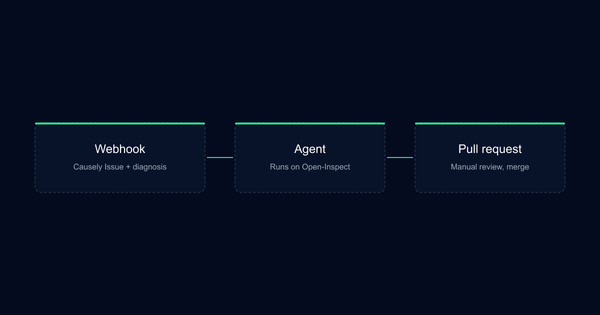
Named root causes are what turn a guessing agent into one you can trust to act without manual review.
AI agents reconstruct environment state from raw telemetry on every reliability query. Causal context eliminates the reconstruction and cuts token use by 60%.