background-agents
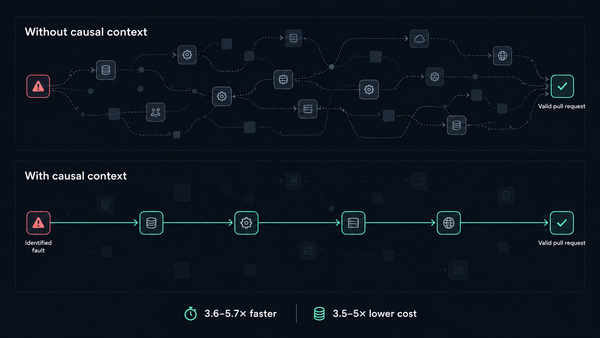
How to make Claude background agents 3-5x faster and cheaper
In three regression scenarios, Claude Managed Agents with Causely produced correct fixes 3.6–5.7x faster and at 3.5–5x lower cost than the baseline agent.

background-agents
In three regression scenarios, Claude Managed Agents with Causely produced correct fixes 3.6–5.7x faster and at 3.5–5x lower cost than the baseline agent.
background-agents
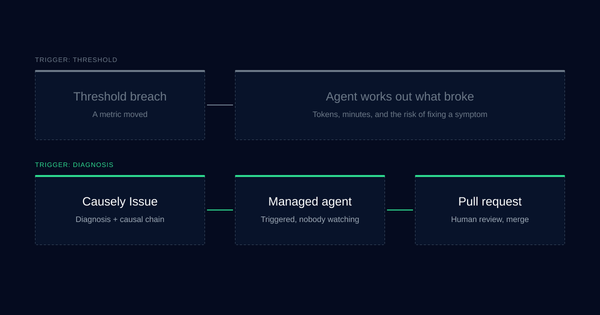
A control band breach tells an autonomous agent only that a metric moved. A trigger carrying a causal chain tells it what broke and how far the problem reaches.
causal reasoning
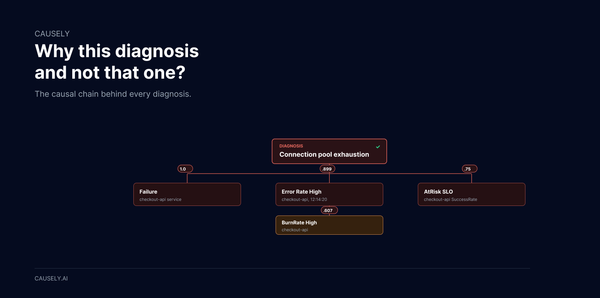
New Causely MCP tools show which diagnoses an agent ruled out and how far a failure would spread, so teams can verify the agent's reasoning before acting in production.
mcp
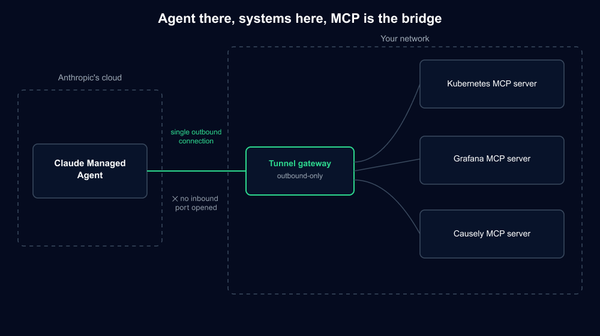
MCP tunnels let Claude Managed Agents reach and authenticate to real infrastructure, but access alone doesn't make an agent one you'd trust to run on-call.
causal reasoning
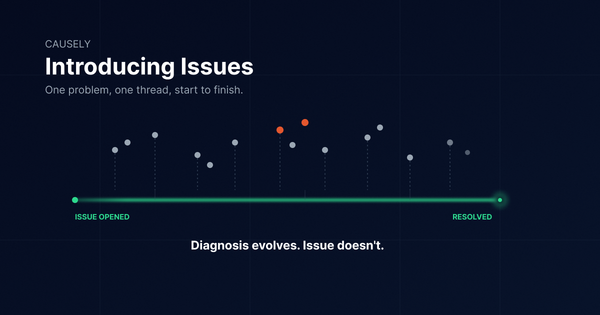
On-call means re-triaging the same problem as diagnoses shift underneath you. Causely's new Issues give people and agents one stable thread instead.
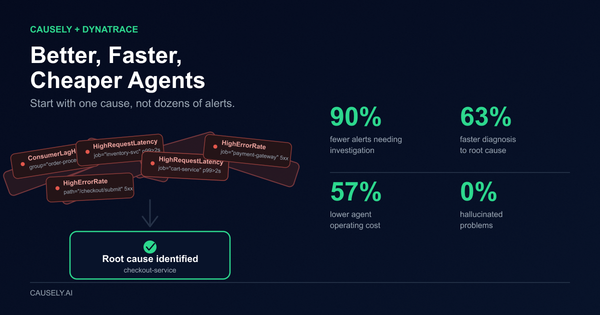
Causely turns Dynatrace entities, topology, and alerts into a causal model that names the root cause, making on-call agents better, faster, and cheaper.
AI
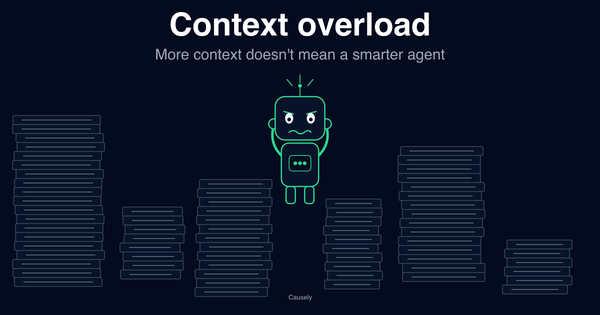
Most frontier LLMs degrade badly by ~1,000 tokens of input, not the millions in their spec sheets. For on-call agents, that means accuracy drops exactly as an incident gets complex. The fix isn't a bigger model. It's not handing the LLM the raw data at all.
AI
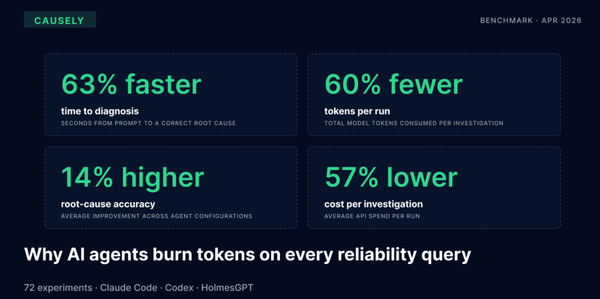
AI agents reconstruct environment state from raw telemetry on every reliability query. Causal context eliminates the reconstruction and cuts token use by 60%.

Blog
Launching a new fintech product required certainty across a complex microservices platform. With Causely modeling cause-and-effect relationships across services, Humm Group gained system-level understanding and confidence that critical dependencies behaved correctly during launch.
Causely product
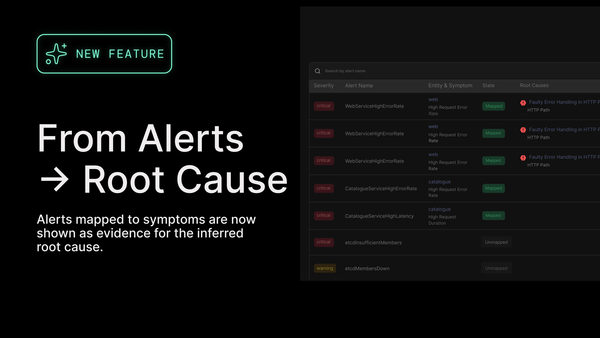
Alerts are signals, not explanations. By explicitly mapping alerts to symptoms and inferred root causes, Causely turns alert noise into a coherent explanation of what is actually happening in the system.
Causely product
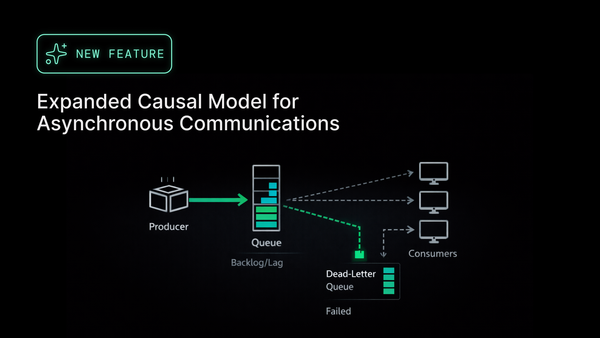
Causely’s causal model has been expanded for asynchronous messaging systems. Instead of treating queues as opaque buffers, Causely models messaging infrastructure as it operates in production, making asynchronous failures explicit and explainable.
integration
Causely’s expanded Datadog integration turns Datadog APM signals into system-level causal intelligence, helping teams understand how issues propagate across services and pinpoint true root cause.