causal reasoning
How to Check an Agent's Diagnosis Before It Touches Production
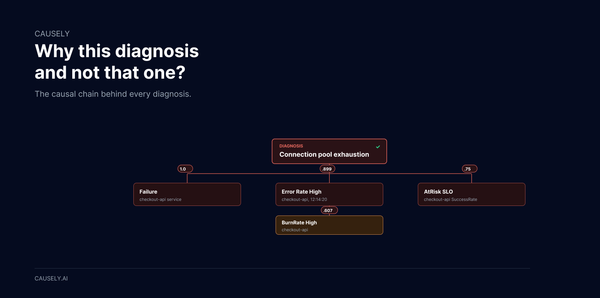
New Causely MCP tools show which diagnoses an agent ruled out and how far a failure would spread, so teams can verify the agent's reasoning before acting in production.
causal reasoning
New Causely MCP tools show which diagnoses an agent ruled out and how far a failure would spread, so teams can verify the agent's reasoning before acting in production.
agent-reliability
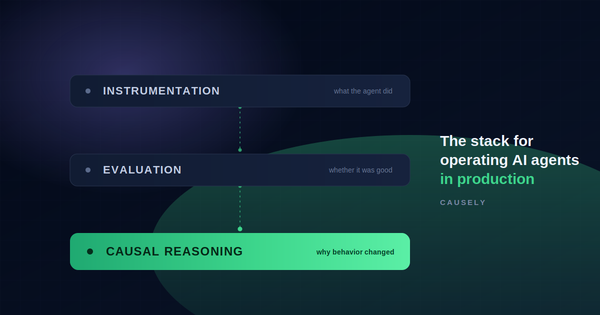
Operating AI agents in production takes three layers: instrumentation, evaluation, and causal reasoning, including the root-cause analysis behind agent reliability.
causal reasoning
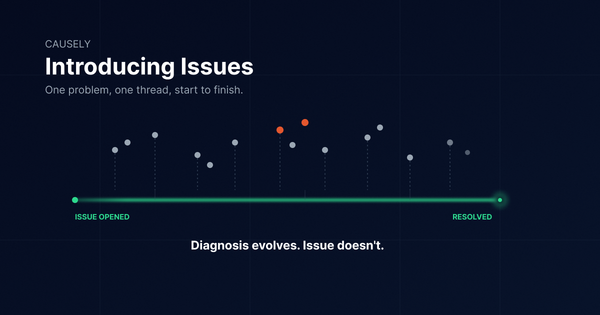
On-call means re-triaging the same problem as diagnoses shift underneath you. Causely's new Issues give people and agents one stable thread instead.
AI
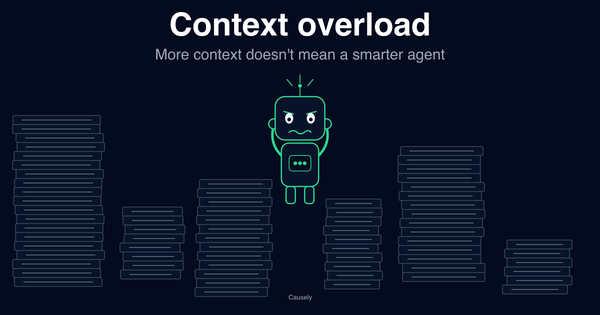
Most frontier LLMs degrade badly by ~1,000 tokens of input, not the millions in their spec sheets. For on-call agents, that means accuracy drops exactly as an incident gets complex. The fix isn't a bigger model. It's not handing the LLM the raw data at all.

semantics
Observability semantics fall into six layers, from entity inventory to constraints. Most tooling reaches layer two. This post defines all six precisely.
AI
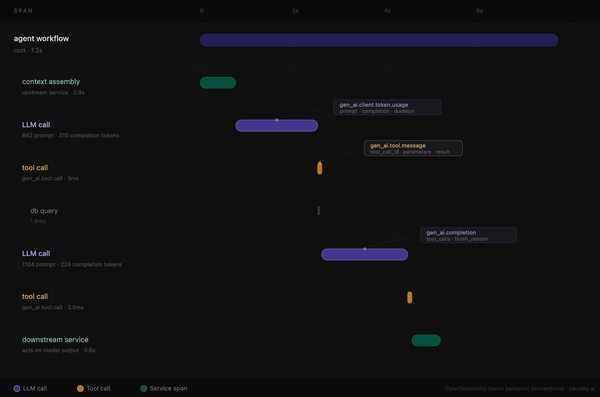
Standard observability tools were built for deterministic systems. GenAI applications break that contract — token counts shift, tool call patterns change, completion rates drop — and none of it fires an alert. Here is what OTel GenAI instrumentation gives you today, and where the gaps remain.
Ops agents
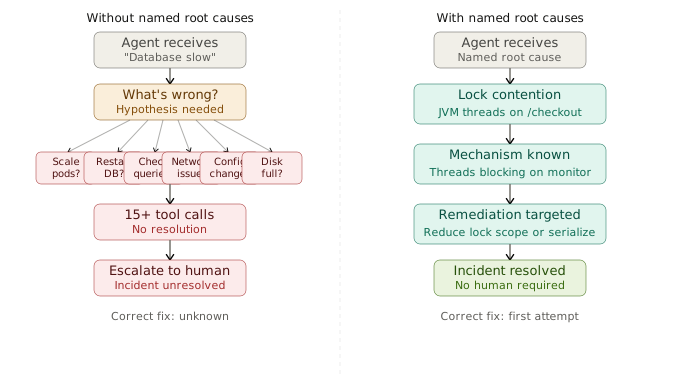
Named root causes are what turn a guessing agent into one you can trust to act without manual review.