What Is a Causal Model in Observability?
A causal model isn’t an LLM. Here’s what causal models are, how they differ from rules engines and correlation, and why agents need them.
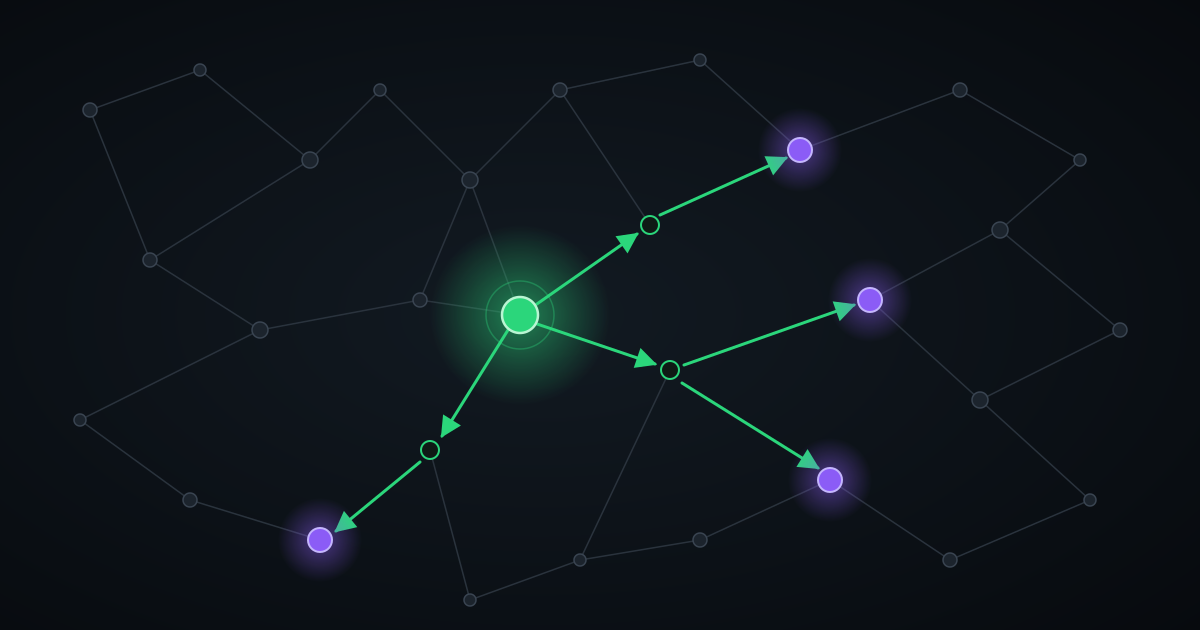
In 2026, the word "model" seems to mean one thing to almost everyone: a large language model. So when we tell customers that Causely is a system that builds and maintains live causal models of their environment, a lot of people interpret that to mean we're training or tuning an LLM on their data.
To be clear, we are not.
The causal models built and maintained by Causely contain no neural network, don't produce answers by predicting the next word, and are never trained on your data. Here's what they are and how they work.
A Causal Model Is Knowledge of Cause and Effect
A causal model describes how the behavior of one kind of component affects the components around it. Consider an exhausted database connection pool as an example. It raises latency for anything querying that database, which can cause timeouts in the services calling those, which can surface as errors at the edge.
The models are generic: they encode how effects propagate in general, not how your particular environment is wired. That database chain holds whether the database runs in Kubernetes, on a VM, or as a managed cloud service.
You can also inspect the models and extend them with causes specific to your stack. Nothing about how Causely reaches an answer is hidden.
How General Knowledge Becomes Specific to Your Environment
Causely works from a live map of your environment: every component across infrastructure, platform, and application layers, plus your third-party dependencies, and how they all connect. Causely can discover and maintain that map itself, read one your team already maintains (such as a topology in your data lake), or combine the two and fill in the gaps.
It then applies the general causal knowledge to that map. The result covers your specific environment at that moment: typically tens of thousands of possible causes and millions of cause-symptom combinations. Those results can be queried by your agents over MCP, automatically trigger a background agent, or be written into your own knowledge graph or data platform as often as you need.
When symptoms appear, Causely works out which cause best explains them. That inference is deterministic: the same symptoms produce the same answer every time. It can also pinpoint a cause you have no direct visibility into, such as an external dependency, because that cause still shows up in the symptoms it creates in the parts of your stack around it.
If the evidence can’t pinpoint a specific cause, Causely reports what it can conclude rather than guessing. For example, it may identify that a particular component is degraded and is causing the anomalies on everything that depends on it, without concluding why it’s degraded if the evidence doesn’t show that.
As your environment changes, the results update with it. There is no need to write conditional rules or runbooks.
Causal Models vs. Rules Engines
A rules engine encodes specific scenarios: if these alerts fire together, the cause is X. Someone must write each rule for each environment and rewrite it every time the environment changes. A scenario nobody wrote a rule for goes unexplained.
A causal model encodes how effects propagate between types of components, independent of any one environment. Causely applies it to your live map and derives the specific scenarios automatically, including ones nobody anticipated. When your environment changes, the scenarios change with it.
Rules also struggle when several things go wrong at once, because overlapping symptoms can match multiple rules or none. A causal model weighs all the observed symptoms together and identifies the cause, or causes, that best explain them.
Causal Models vs. Correlation-Based Analysis
Plenty of observability platforms claim to provide some form of "causal AI" or "causal analysis." In many cases, what sits underneath is a correlation engine built to find the signals that turned anomalous around the same time, filter them by topology, and rank the likeliest culprit.
Correlation tells you what changed together, but it doesn't tell you whether A caused B, B caused A, or both were caused by C. When several parts of your stack degrade at once, the earliest or most visible anomaly often gets blamed, even when it's a symptom of something else. A common example is an API gateway: every request passes through it, so its errors and latency line up with nearly every issue, and it gets blamed even when the cause sits behind it.
One other major limitation of correlation-based approaches is that it only works with signals it can see. A cause with no direct telemetry, such as an issue inside a third-party dependency, can't be flagged because it isn't in the data. A causal model can still identify it from the symptoms it produces around it.
Why Causely Matters for SRE and DevOps Agent Builders
On their own, agents are good at searching and summarizing data and drawing plausible conclusions from it, but plausible isn't proven. When several explanations fit the data, they can't reliably tell which one is the actual cause, so they pattern-match until one looks right. That applies whether the agent is triaging a live issue, assessing the risk of a change, or looking for emerging problems.
With Causely, an agent queries cause and effect directly instead of reconstructing it every time. In our benchmark, agents with Causely diagnosed 63% faster at 57% lower cost, and hallucinated incidents dropped to zero.
The causal knowledge Causely maintains also helps prevent issues, in two ways. First, Causely infers the causes your environment could produce before any of them occur, so you can see what a planned change puts at risk before it ships. Second, a background agent connected to Causely can catch emerging issues from their early symptoms and address them before they affect users.
In short, a causal model is explicit, inspectable knowledge of cause and effect across your environment. Your agents and engineers can query it directly instead of spending time and tokens building and testing hypotheses about what caused what, otherwise known as guessing.
See It In Your Own Stack
Getting started with Causely is easy. Check out how in our docs or sign up to start free, no credit card required.